AI Scientific Discovery: 7 Powerful Breakthroughs & 5 Hidden Challenges
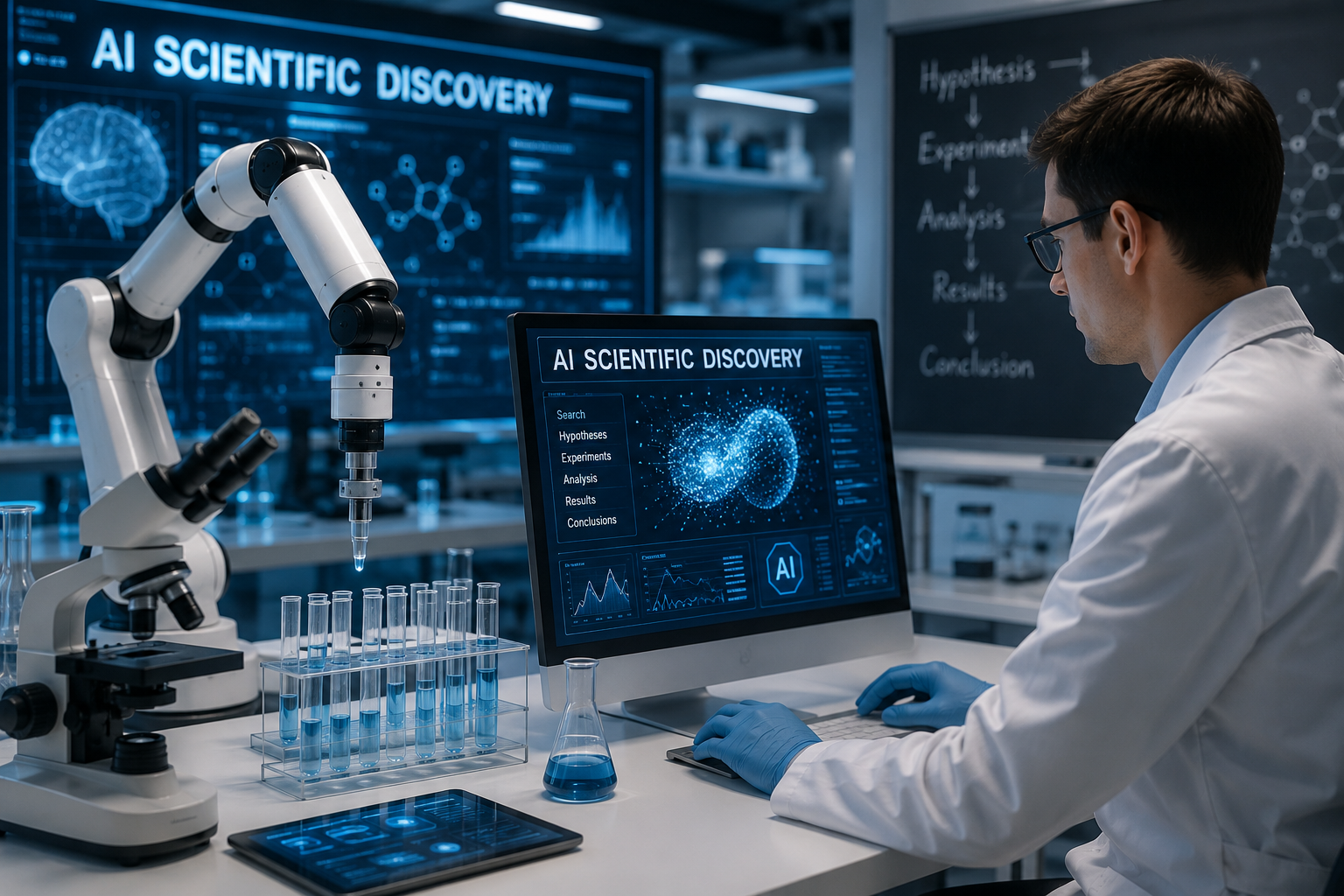
AI Scientific Discovery is changing the way researchers explore questions, analyze data, create hypotheses, design experiments, and search for new knowledge. Artificial intelligence is no longer limited to simple data processing. Modern AI systems can help researchers connect information from large collections of scientific literature, suggest possible hypotheses, analyze experimental results, and in some cases work with automated laboratory systems. Recent 2026 research shows that the field is moving toward more autonomous scientific workflows, although important limitations and risks remain.
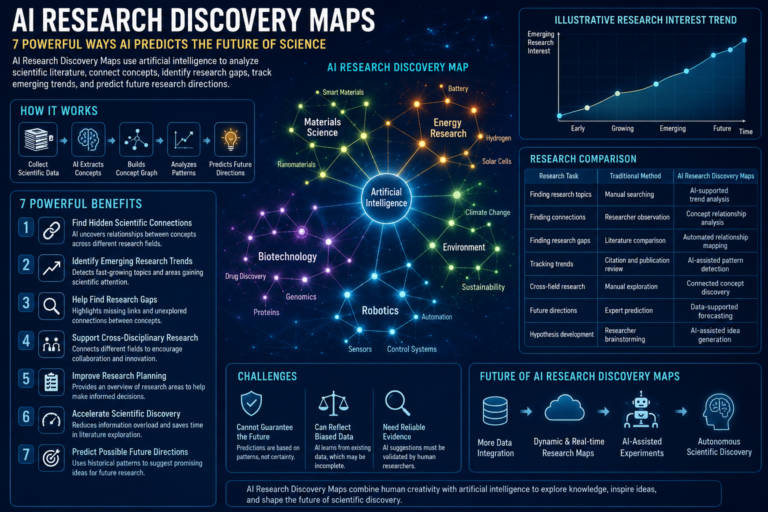
The growing interest in AI Scientific Discovery comes from one simple problem: science is producing more information than individual researchers can realistically read and analyze. AI can process large amounts of information quickly, helping scientists identify patterns and relationships that may otherwise take much longer to find.
Table of Contents
- What Is AI Scientific Discovery?
- 7 Powerful AI Scientific Discovery Breakthroughs
- 5 Hidden AI Scientific Discovery Challenges
- The Future of AI Scientific Discovery
- Final Thoughts
What Is AI Scientific Discovery?
AI Scientific Discovery refers to the use of artificial intelligence to support or automate parts of the scientific research process. This can include finding research papers, analyzing datasets, generating hypotheses, designing experiments, writing code, running simulations, interpreting results, and improving research ideas.
Traditional scientific research normally moves through a cycle of observation, hypothesis, experimentation, analysis, and refinement. New AI systems are increasingly being designed to participate in several of these stages rather than performing only one narrow task.
A 2026 Nature study described a multi-agent system capable of generating hypotheses, proposing experiments, analyzing results, and updating hypotheses. This demonstrates how AI Scientific Discovery is moving toward a more connected research cycle.
7 Powerful AI Scientific Discovery Breakthroughs
1. AI Scientific Discovery Can Generate New Hypotheses
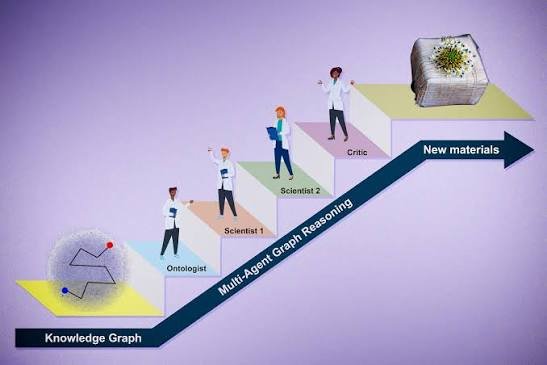
One of the most exciting developments in AI Scientific Discovery is AI-assisted hypothesis generation.
A hypothesis gives researchers a possible explanation or prediction that can be tested. Traditionally, creating a useful hypothesis has depended heavily on human experience, creativity, and knowledge.
Modern AI systems can analyze scientific literature and combine information from different areas to suggest possible research directions. A 2026 ACS Materials Letters perspective explains that large language models can generate novel, plausible, and actionable hypotheses by computationally recombining existing knowledge.
This does not mean that every AI-generated idea is correct. Researchers still need to evaluate whether an idea is scientifically meaningful and experimentally testable.
2. AI Scientific Discovery Can Analyze Huge Research Collections
Scientists face another major problem: the enormous volume of scientific information.
AI can help search, classify, summarize, and connect information across large research collections. Instead of manually examining thousands of documents, researchers can use AI systems to identify relevant concepts and possible connections.
Google has also described AI research tools designed to help scientists generate hypotheses and explore computational discoveries. These systems can evaluate large numbers of possible ideas or code variations much faster than a purely manual approach.
This makes AI Scientific Discovery especially useful in fields where researchers must work with massive datasets.
3. AI Scientific Discovery Can Automate Experiments
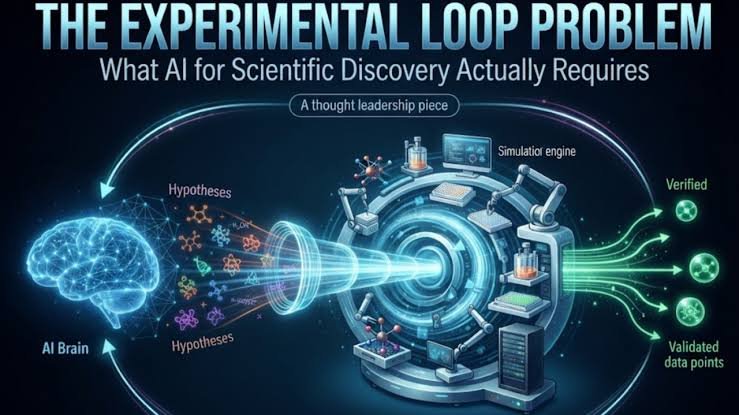
The next major breakthrough is the connection between AI and laboratory automation.
Self-driving laboratories combine software, robotics, sensors, and laboratory equipment. AI can help determine what experiment should be performed next, while automated equipment can execute the procedure.
Recent research on AutoLabs describes multi-agent systems designed to translate natural-language instructions into executable protocols for automated chemical experimentation.
This creates the possibility of a continuous research loop:
AI idea → experiment → results → analysis → improved idea
Such a workflow could significantly reduce the time required for repetitive experiments.
4. AI Scientific Discovery Can Speed Up Data Analysis
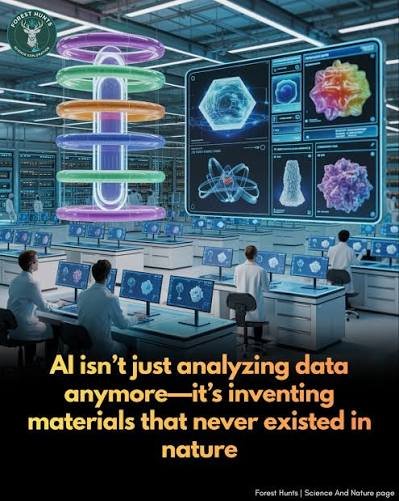
Scientific experiments often produce enormous amounts of data. Researchers then need to clean the information, identify patterns, test models, and interpret results.
AI can assist with these tasks by rapidly processing complex datasets and identifying relationships.
This is particularly useful in areas such as biology, chemistry, astronomy, climate science, and materials research. AI does not eliminate the need for scientists, but it can reduce the amount of repetitive analysis they have to perform.
A 2025 review in npj Artificial Intelligence describes the growing role of large language models across multiple stages of the scientific process, including hypothesis testing, experimental design, and data analysis.
5. AI Scientific Discovery Can Improve Computational Research
Many scientific questions can be explored through simulations and computer experiments before researchers perform physical experiments.
AI can generate and evaluate different computational approaches, helping researchers explore a larger search space.
Google’s 2026 research tools include computational discovery systems that can generate and score large numbers of code variations for scientific problems. Examples discussed include areas such as solar forecasting and epidemiology.
This approach could make computational research more efficient while helping scientists investigate possibilities that would be difficult to test manually.
6. AI Scientific Discovery Can Connect Multiple Research Agents
Another important development is the rise of multi-agent scientific research.
Instead of asking one AI system to perform every task, different AI agents can specialize in different responsibilities. One agent may search literature, another may analyze data, another may generate hypotheses, and another may evaluate proposed experiments.
The 2026 Nature research on the Robin system demonstrated a multi-agent approach that combines literature search, hypothesis generation, experimental planning, data analysis, and updated hypotheses.
This could eventually create research systems that operate more like a virtual scientific team.
7. AI Scientific Discovery Can Automate Parts of the Research Lifecycle
Perhaps the biggest breakthrough is the attempt to automate an entire research workflow.
A 2026 Nature paper on The AI Scientist described a system that can generate research ideas, write code, conduct experiments, analyze data, create figures, write a scientific manuscript, and perform peer review.
This does not mean AI has completely replaced scientists. Human oversight remains important, particularly for scientific validity, experimental safety, interpretation, and publication decisions.
However, it shows how quickly AI Scientific Discovery is expanding from individual research tasks toward integrated scientific workflows.
AI Scientific Discovery Research Impact
Research into AI-assisted science is already showing measurable effects. A 2025 Nature study analyzed 41.3 million scientific papers and found that scientists using AI-augmented research published 3.02 times more papers, received 4.84 times more citations, and became research project leaders 1.37 years earlier on average than scientists who did not use AI.
Reported impact of AI-augmented research
Selected findings from a Nature study comparing scientists using AI-augmented research with those who did not.0246Papers publishedCitations receivedYears earlier to leadership
Values are relative or reported differences from the study; they should not be interpreted as guaranteed effects for every researcher.
These findings are encouraging, but they also reveal an important issue: greater individual productivity does not automatically mean broader scientific progress.
5 Hidden AI Scientific Discovery Challenges
1. AI Scientific Discovery Can Produce Incorrect Ideas
AI-generated hypotheses may sound convincing while being scientifically weak or incorrect.
Large language models are trained on existing information and can sometimes produce confident answers without reliable evidence. Therefore, researchers must independently verify important claims.
A 2025 Scientific Reports study found that current generative AI was capable of incremental discoveries in its tested setting but struggled with truly fundamental discoveries from scratch and could display overconfidence.
2. AI Scientific Discovery Depends on Data Quality
AI systems are only as reliable as the information available to them.
Scientific databases can contain incomplete information, inconsistent measurements, publication bias, and missing negative results. One Nature correspondence highlighted that scientific literature often contains far fewer failed or negative results than successful findings, creating a potential blind spot for AI trained primarily on published research.
This means better datasets will be essential for reliable AI Scientific Discovery.
3. AI Scientific Discovery Could Narrow Research Focus
AI can make certain research areas more productive, but that may also encourage scientists to concentrate on problems with abundant data.
A Nature study found that AI adoption was associated with a 4.63% contraction in the collective volume of scientific topics studied and a 22% decrease in scientists’ engagement with one another. The researchers described a tension between greater individual impact and a narrower collective research focus.
This is one of the most important hidden challenges because science benefits from diversity of ideas.
4. AI Scientific Discovery Needs Strong Human Verification
Scientific discovery cannot depend entirely on automated outputs.
Researchers need to check whether an AI-generated result is reproducible, logically supported, experimentally valid, and consistent with established knowledge.
Even systems capable of generating papers or experiments require careful human supervision. Automation can make research faster, but speed without verification can increase the amount of incorrect information entering scientific literature.
5. AI Scientific Discovery Creates New Safety Questions
As AI becomes connected to physical laboratory equipment, the risks become more complicated.
A system that only generates text has different risks from one that can control laboratory instruments or robotic equipment. In August 2026, Anthropic introduced a framework intended to help AI agents interact with programmable physical devices such as microscopes and robotic arms, highlighting the growing importance of safety when AI moves from software into physical environments.
Therefore, future AI Scientific Discovery systems will need strong access controls, monitoring, testing, and human oversight.
AI Scientific Discovery and the Future of Research
The future of AI Scientific Discovery is likely to involve collaboration between humans, AI agents, automated laboratories, simulations, and scientific databases.
Researchers may increasingly use AI to identify promising questions while humans focus on creativity, scientific judgment, experimental interpretation, and ethical decisions.
The biggest opportunity is not necessarily creating an AI that replaces scientists. Instead, the more realistic goal may be creating AI systems that allow researchers to explore more possibilities in less time.
A recent Google Research discussion also points toward this direction, describing AI agents that can help with hypothesis generation and computational discovery while emphasizing the importance of validation.
The major bottleneck could therefore shift from generating ideas to validating ideas. Google DeepMind researchers have specifically discussed this emerging validation challenge as AI agents become more capable of proposing scientific possibilities.
Final Thoughts on AI Scientific Discovery
AI Scientific Discovery is developing from a simple research-support technology into a broader scientific workflow. AI can now help generate hypotheses, analyze information, design experiments, automate laboratory tasks, explore simulations, and even produce research papers.
The seven breakthroughs show why this technology is attracting serious scientific attention. At the same time, the five challenges demonstrate why human researchers remain essential.
The future of AI Scientific Discovery will depend on finding the right balance between automation and human judgment. If scientists can combine AI’s speed and ability to process information with human creativity, skepticism, and scientific responsibility, AI could become one of the most powerful research tools of the coming decade.
Low-competition long-tail keywords naturally targeted in this article: AI Scientific Discovery, AI scientific discovery tools, AI hypothesis generation, autonomous scientific discovery, AI research automation, AI for scientific research.