Research Proposal: 7 Proven Steps to Create a Strong Proposal & Avoid Failure
A Research Proposal is the foundation of a successful research project. It explains what you want to study, why the topic matters, what problem you are trying to solve, and how you plan to conduct the research. A well-written Research Proposal can make your idea easier to understand and show that your project is realistic and worthwhile. On the other hand, an unclear problem, weak objectives, poor research questions, or an unrealistic methodology can make even a good research idea difficult to approve. This guide explains seven proven steps to help you create a strong proposal while avoiding common mistakes.
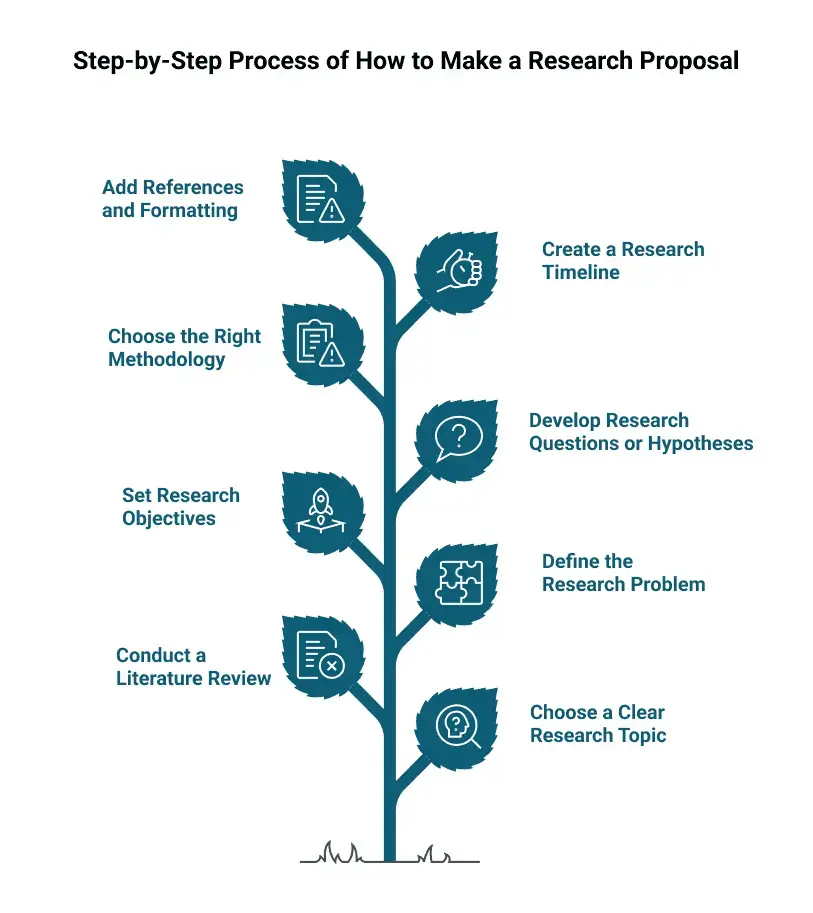
Table of Contents
- What Is a Research Proposal?
- 7 Proven Steps for a Strong Research Proposal
- Research Problem and Objectives
- Literature Review and Methodology
- Timeline and Expected Results
- Common Research Proposal Mistakes
- How to Make a Research Proposal Stronger
- FAQs About Research Proposal
- Final Thoughts
What Is a Research Proposal?
A Research Proposal is a formal document that presents a planned research project. It gives readers a clear overview of the topic, research problem, objectives, questions, existing research, methodology, and expected contribution.

Students, academics, and professional researchers often use proposals to explain their research plans to supervisors, universities, research committees, organizations, or funding bodies. The proposal allows others to evaluate whether the research is relevant, practical, and achievable.
A strong proposal is more than a description of an interesting topic. It creates a logical connection between the research problem and the proposed solution. Every major section should support the main purpose of the study.
The quality of a Research Proposal often depends on how clearly the researcher can explain the research idea. You do not need unnecessarily complicated language to sound academic. Clear, precise, and well-organized writing is usually much more effective.
7 Proven Steps for a Strong Research Proposal
Creating a strong Research Proposal becomes easier when the research idea is developed step by step. Each stage has a specific purpose, but all sections should work together as one complete research plan.
Research Proposal Step 1: Choose a Clear Research Problem
The first step is to identify a specific research problem. A research problem describes an issue, question, limitation, or knowledge gap that deserves further investigation.
A broad topic can make research difficult because it may include too many variables and areas. For example, “online education” is a very broad subject. A more focused topic could examine how online education affects student engagement among university students.
A focused problem gives your Research Proposal a clear direction. It also makes it easier to develop research questions, objectives, methodology, and expected outcomes.
Before selecting a problem, consider whether enough reliable information is available to support the study. You should also think about your available time, resources, access to data, and the realistic scope of the project.
Research Proposal Step 2: Develop Strong Research Questions
Research questions define what your study is trying to discover. They should directly connect to the research problem and provide a clear direction for collecting and analyzing information.

A good research question should be specific enough to investigate but broad enough to produce meaningful findings. Questions that are too general can make the research unfocused, while extremely narrow questions may not provide enough useful information.
For example, instead of asking, “Does technology affect education?” a more focused question could ask, “How does the use of digital learning platforms affect student engagement in university courses?”
This type of question gives the researcher a clearer path for developing objectives and selecting an appropriate methodology.
Research Proposal Step 3: Set Realistic Research Objectives
Research objectives explain what the study intends to achieve. They turn the main research purpose into clear and manageable goals.
In a Research Proposal, objectives should be closely connected to the research questions. If the research question focuses on student engagement, the objectives should also examine relevant aspects of engagement rather than introducing unrelated topics.
Realistic objectives are especially important because they help control the scope of the study. A project with too many objectives can become difficult to complete within the available time.
Objectives should also be written in clear academic language. They should describe what the researcher intends to investigate, examine, compare, evaluate, or understand.
Research Problem and Objectives
The research problem and objectives form the central structure of a Research Proposal. The problem explains what needs to be investigated, while the objectives explain what the researcher intends to accomplish.
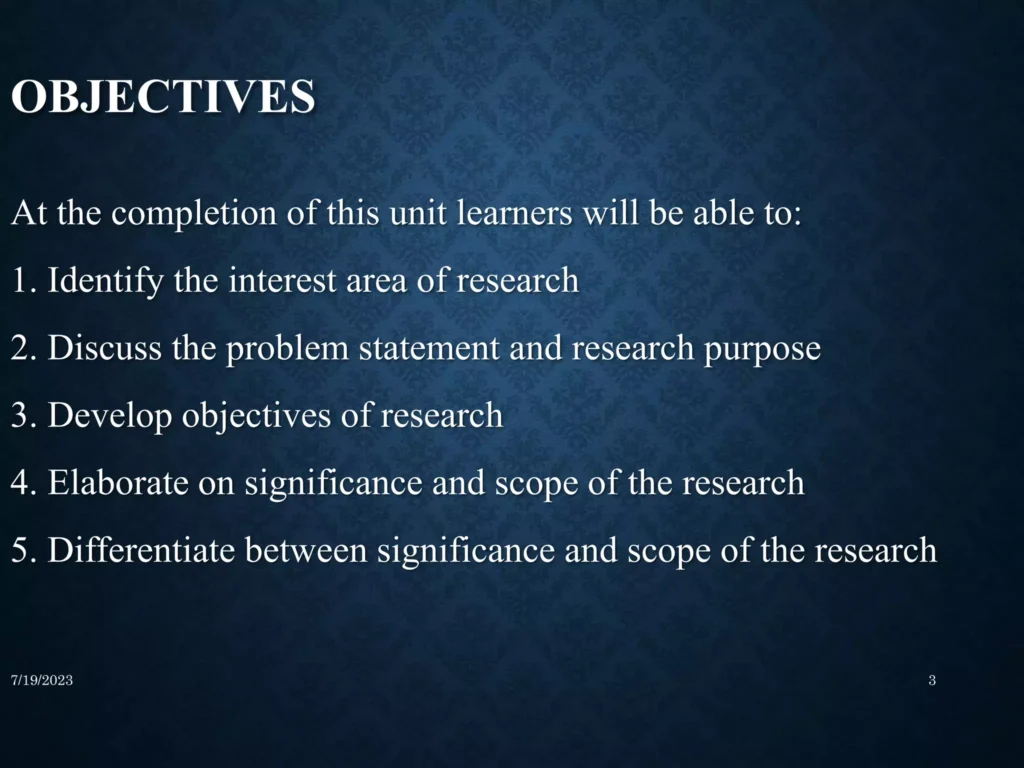
If these two elements are not connected, the proposal can feel confusing. A strong proposal creates a natural progression from the research problem to the research questions and then to the objectives.
Research Proposal and the Research Gap
A research gap is an area where existing research is limited, incomplete, inconsistent, or still needs further investigation. Identifying a meaningful gap can strengthen the reason for conducting your study.
Researchers can identify potential gaps by reviewing academic studies, research papers, journal articles, and previous findings related to the selected topic. Pay attention to limitations, unanswered questions, conflicting findings, and recommendations for future research.
However, a research gap should be described accurately. Avoid claiming that no previous research exists unless you have strong evidence to support that statement. In many cases, the gap is not a completely unexplored topic but a specific limitation or missing perspective within existing research.
Literature Review and Methodology
The literature review and methodology are two of the most important sections of a Research Proposal. The literature review establishes what is already known, while the methodology explains how your proposed study will investigate the research problem.
Research Proposal Literature Review
A literature review examines relevant research that has already been published on your topic. Its purpose is not simply to summarize one study after another.
Instead, you should compare findings, identify patterns, discuss differences, and explain how previous research relates to your proposed study. This approach makes the literature review more analytical and useful.
Reliable academic journals, scholarly publications, university resources, and reputable research databases can provide stronger sources than random websites. Sources should be selected according to their relevance, credibility, quality, and relationship to your research questions.
A good literature review should eventually lead the reader toward your research gap. By the end of this section, the reader should understand what is already known and why your proposed research is still valuable.
Research Proposal Methodology
The methodology explains how the research will actually be conducted. This section should provide enough detail to demonstrate that the proposed study is practical.
Depending on the research question, you may use qualitative, quantitative, or mixed-method research. Qualitative research may involve interviews, observations, or textual analysis. Quantitative research may use surveys, experiments, or numerical datasets. Mixed-method research combines qualitative and quantitative approaches.
The chosen methodology should match the research questions. You should not select a method simply because it is popular. The method needs to provide an appropriate way to collect and analyze the information required to answer the research questions.
Research Proposal Data Collection
Data collection should be planned carefully. The researcher needs to identify where the data will come from and how it will be collected.
For research involving people, considerations such as participant selection, consent, privacy, and data protection may be important. For research using existing datasets or documents, the proposal should explain why those sources are appropriate.
A clear data collection plan makes a Research Proposal more realistic because it shows that the researcher has considered the practical side of the project.
Timeline and Expected Results
A realistic timeline helps demonstrate that the proposed research can be completed within the available period. Research normally includes several stages, including topic development, literature review, data collection, analysis, writing, and final editing.
Each stage should receive a reasonable amount of time. Researchers should also leave some flexibility for unexpected delays, especially when collecting data from participants or external sources.
Research Proposal Expected Outcomes
Expected outcomes describe the potential contribution of the research. They should not be presented as guaranteed findings because the actual results are not known before the research is conducted.
A study may provide a better understanding of a particular problem, identify new patterns, evaluate an existing approach, or provide useful information for future research.
Expected outcomes should connect directly to the research objectives. If the objectives focus on one problem but the expected outcomes discuss an unrelated issue, the proposal will lack consistency.
Research Proposal Planning Table
The following table provides an illustrative planning model, not measured research statistics. It shows how different areas can receive attention when developing a balanced proposal.
| Research Area | Suggested Planning Focus |
|---|---|
| Research Problem | 20% |
| Research Objectives | 15% |
| Literature Review | 20% |
| Methodology | 20% |
| Timeline | 10% |
| Expected Outcomes | 10% |
| Final Review | 5% |
The exact balance will depend on your university, research level, topic, and project requirements. The important point is that no major section should be ignored.
Common Research Proposal Mistakes
One of the most common mistakes is choosing a topic that is too broad. A broad topic may sound interesting, but it can become difficult to manage because the researcher has too many variables, sources, and possible directions.
Another common problem is writing unclear research questions. If the main question is vague, it becomes difficult to decide what data should be collected or how the findings should be analyzed.
A weak literature review can also reduce the quality of a Research Proposal. Simply listing previous studies does not demonstrate critical understanding. The researcher should explain how those studies connect to the research problem and where limitations or gaps remain.
Poor methodology is another serious issue. A proposal should explain why the selected research method is appropriate. The researcher should also consider whether participants, data, tools, software, and other required resources are realistically available.
Unrealistic claims should also be avoided. A small research project should not promise to completely solve a major global problem. Strong proposals make realistic claims about their potential contribution.
Finally, failing to proofread can create unnecessary problems. Grammar errors, inconsistent formatting, missing references, and unclear sentences can make an otherwise strong research idea appear less professional.
How to Make a Research Proposal Stronger
A strong Research Proposal begins with a focused idea. Instead of trying to study everything related to a topic, select one specific problem that can realistically be investigated.
The proposal should also maintain consistency from beginning to end. The research problem should connect to the research questions. The questions should connect to the objectives, while the methodology should provide a practical way to address those objectives.
Your writing style also matters. Academic writing should be professional, but it does not need to be unnecessarily complicated. Shorter sentences and precise explanations can make complex research ideas easier to understand.
Another useful approach is to review the proposal from the perspective of someone who knows nothing about your project. Ask whether the research problem is obvious, whether the purpose is clear, and whether the methodology makes sense.
Before submitting the final Research Proposal, check your institution’s specific formatting, citation, word-count, and submission requirements. Different universities and departments may have different expectations.
FAQs About Research Proposal
What is a Research Proposal?
A Research Proposal is a formal document that explains a planned research project. It normally includes the research problem, questions, objectives, literature review, methodology, and expected contribution.
Why is a Research Proposal important?
A Research Proposal helps communicate the purpose and plan of a research project. It also allows supervisors or committees to evaluate whether the proposed research is relevant and achievable.
How long should a Research Proposal be?
There is no universal length. Requirements can vary depending on the university, academic level, subject, and type of research. Always follow the guidelines provided by your institution.
What should a Research Proposal include?
A typical proposal includes a research background, problem statement, research questions, objectives, literature review, methodology, timeline, expected outcomes, and references. Specific requirements may vary.
How can I avoid Research Proposal failure?
Start with a focused research problem, create clear questions and objectives, use reliable sources, select an appropriate methodology, keep the project realistic, and carefully proofread the final document.
Final Thoughts
A well-developed Research Proposal provides a clear roadmap for a research project. It explains the problem, establishes why the study matters, identifies the research gap, and presents a practical plan for investigating the topic.
The strongest proposals are not necessarily the ones with the most complicated language. They are the ones that communicate a focused research idea clearly and connect every major section logically.
By choosing a manageable research problem, creating strong research questions, developing realistic objectives, reviewing existing literature, selecting the right methodology, planning a practical timeline, and carefully editing the final document, you can create a Research Proposal that is clearer, more credible, and easier to evaluate.
Most importantly, remember that a proposal should be realistic. Avoid unnecessary claims, unsupported information, and an overly broad scope. A focused and carefully planned proposal gives your research project a much stronger starting point.