9 Powerful Virtual Cell Breakthroughs: Hope & Risks
Introduction to Virtual Cell Research Breakthroughs
Virtual Cell Research Breakthroughs are opening exciting possibilities in modern biology by helping scientists understand how living cells behave, respond to treatments, and interact with their environments. Researchers are increasingly combining artificial intelligence (AI), biological data, microscopy, and computer simulations to develop digital representations of cells. These models may help scientists explore biological processes that are difficult, expensive, or time-consuming to study through laboratory experiments alone. However, virtual cells are not perfect copies of real cells, and their predictions must be tested against experimental evidence. Their potential benefits come with important questions about accuracy, privacy, scientific reliability, and responsible use 9 Powerful Virtual Cell Breakthroughs: Hope & Risks.
Table of Contents
- What Are Virtual Cell Research Breakthroughs?
- How AI Is Transforming Virtual Cell Research Breakthroughs
- Nine Important Virtual Cell Research Breakthroughs
- Benefits of Virtual Cell Research Breakthroughs
- Hidden Risks and Scientific Challenges
- The Future of Virtual Cell Research Breakthroughs
- Frequently Asked Questions
- Conclusion
What Are Virtual Cell Research Breakthroughs?
Virtual cell research uses computational models to represent some of the structures, activities, and responses of biological cells. These models can combine information about genes, proteins, molecules, and cellular processes to help researchers investigate how cells work 9 Powerful Virtual Cell Breakthroughs: Hope & Risks.
A virtual cell may represent a particular cell type or simulate selected biological activities. Some systems rely on mathematical models, while newer approaches use machine learning to identify patterns in large biological datasets. The goal is not simply to create an attractive digital image of a cell but to build a useful scientific model that can generate testable predictions.
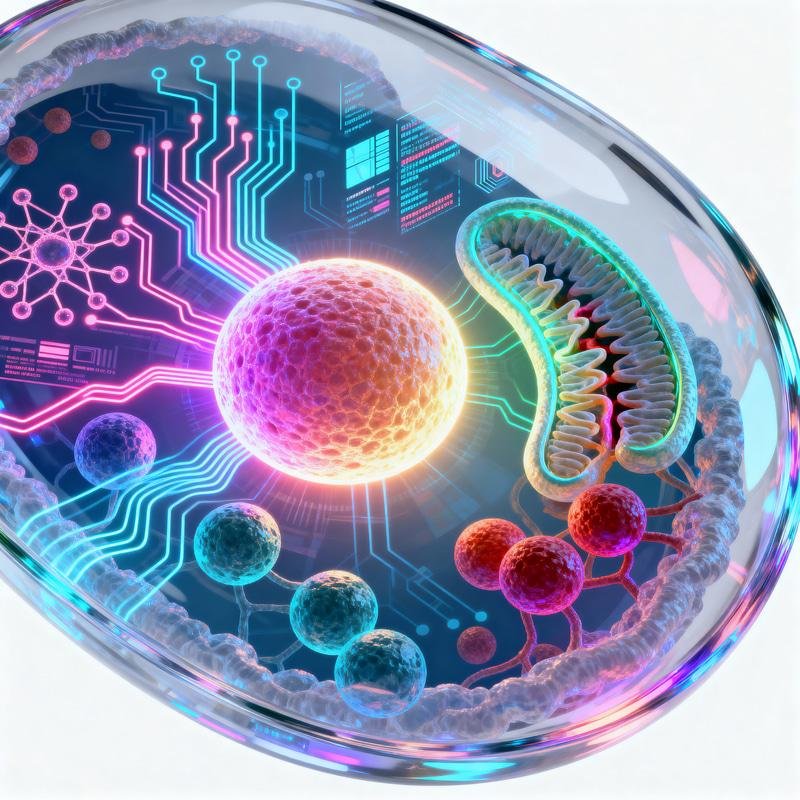
The term virtual cell can describe different levels of technology. Some models simulate a limited biological process, while more ambitious projects aim to represent many interacting cellular systems. A fully accurate digital copy of every aspect of a living cell remains an extremely difficult scientific goal 9 Powerful Virtual Cell Breakthroughs: Hope & Risks.
How AI Is Transforming Virtual Cell Research Breakthroughs
Artificial intelligence can analyze complex biological datasets and detect relationships that may be difficult for researchers to identify manually. When trained on suitable data, AI models can help predict how cells might respond to changes in their environment, genetic activity, or exposure to particular substances 9 Powerful Virtual Cell Breakthroughs: Hope & Risks.
Machine Learning in Virtual Cell Research Breakthroughs
Machine learning systems learn patterns from examples. In cell research, those examples may include gene-expression measurements, microscopy images, protein information, and experimental observations. Researchers can use these patterns to generate hypotheses about cellular behavior.
However, a pattern discovered by AI does not automatically prove a biological cause. Predictions must be compared with independent datasets and, when possible, validated in laboratory experiments 9 Powerful Virtual Cell Breakthroughs: Hope & Risks.
Biological Data and Digital Cell Models
A useful virtual cell requires reliable data from many sources. Single-cell RNA sequencing, for example, can measure gene activity in individual cells, while microscopy can reveal cellular structures and changes over time. Combining different types of evidence may produce more informative models than relying on a single dataset.
Nine Important Virtual Cell Research Breakthroughs
1. AI-Powered Virtual Cell Models
One major direction in virtual cell research involves AI models that learn from large collections of biological measurements. These systems aim to represent relationships between genes, cellular states, and biological functions 9 Powerful Virtual Cell Breakthroughs: Hope & Risks.
Researchers hope these models will help predict how cells respond to specific changes. Their usefulness will depend on the quality of training data, the diversity of cell types represented, and how well their predictions perform in new experiments 9 Powerful Virtual Cell Breakthroughs: Hope & Risks.
2. Single-Cell Data Analysis
Single-cell technologies allow scientists to study differences between individual cells rather than treating an entire tissue as uniform. This matters because cells in the same tissue can behave differently, even when they share similar genetic information.
Virtual cell models can use these detailed measurements to identify cell populations, compare cellular states, and investigate how cells change during development or disease. Better analysis could help researchers understand biological differences that traditional averages may hide 9 Powerful Virtual Cell Breakthroughs: Hope & Risks.
3. Predicting Cellular Responses to Treatments
Another promising goal is predicting how a cell might react to a drug or other intervention. If a model can identify likely changes in cellular activity, researchers may be able to prioritize experiments and investigate promising treatments more efficiently.
These predictions are not substitutes for clinical trials or laboratory testing. A result that appears promising in a computer model may fail in living tissue because of biological complexity, dosage, metabolism, or interactions with other cells 9 Powerful Virtual Cell Breakthroughs: Hope & Risks.
4. Modeling Genetic Changes
Virtual cell systems may help researchers investigate how changing a gene affects other cellular processes. Scientists can use computational predictions to select genetic experiments that are worth testing.
Such work could improve understanding of gene function and disease mechanisms. Nevertheless, biological networks are interconnected, so a single genetic change can produce unexpected effects. Reliable models need to account for these interactions and communicate uncertainty 9 Powerful Virtual Cell Breakthroughs: Hope & Risks.
5. Understanding Disease Mechanisms
Diseases often involve changes across many genes, proteins, and cell types. Virtual cell models may help researchers explore these relationships and generate explanations for how a healthy cellular state becomes disrupted.
For example, scientists could investigate how inflammation, cellular stress, or abnormal signaling influences a particular cell type. These models may help organize complicated evidence, but they cannot establish a disease mechanism without supporting experiments 9 Powerful Virtual Cell Breakthroughs: Hope & Risks.
6. Studying Cellular Development
Cells change their identities and functions as organisms grow and tissues develop. By analyzing data collected at different stages, researchers can model possible transitions between cellular states.
Virtual cell research may help investigate how stem cells develop into specialized cells and how biological signals influence those transitions. This work could contribute to developmental biology and regenerative medicine, although predictions about complex living systems remain challenging 9 Powerful Virtual Cell Breakthroughs: Hope & Risks.
7. Combining Microscopy with AI
Microscopy produces images that show cellular structures, movement, and responses to different conditions. AI tools can analyze these images to detect changes that researchers may otherwise need considerable time to measure.
Combining microscopy with other biological measurements may allow more detailed virtual models. However, image quality, labeling errors, experimental conditions, and differences between laboratories can affect results 9 Powerful Virtual Cell Breakthroughs: Hope & Risks.
8. Supporting Personalized Medicine Research
People can respond differently to the same treatment because of genetic, environmental, and biological differences. Researchers are investigating whether computational models can help explain these variations and identify treatment responses worth studying.
Virtual cell models might eventually contribute to more individualized research strategies. But a cell-level prediction cannot capture every feature of a whole human body. Clinical evidence remains essential before using any model to guide medical decisions 9 Powerful Virtual Cell Breakthroughs: Hope & Risks.
9. Automated Experiments and Model Improvement
Some research systems combine computational predictions with automated laboratory equipment. A model can suggest an experiment, instruments can collect measurements, and the new data can be used to improve the next prediction.
This approach is related to self-driving laboratories and closed-loop experimentation. It may help researchers test more hypotheses systematically. Its success depends on accurate instruments, reproducible procedures, and careful scientific oversight.
Benefits of Virtual Cell Research Breakthroughs
Virtual cell research could make certain scientific workflows more efficient by helping researchers identify promising questions before conducting costly experiments. Computational models can compare hypotheses, integrate different types of data, and highlight gaps in current knowledge.
They may also support collaboration between biologists, computer scientists, statisticians, and medical researchers. A shared model can provide a framework for discussing experimental results and comparing competing explanations 9 Powerful Virtual Cell Breakthroughs: Hope & Risks.
Another potential benefit is improved experimental planning. When models identify which measurements would reduce uncertainty, scientists can design experiments that provide more useful evidence.
These benefits should not be confused with guaranteed savings or immediate medical breakthroughs. The value of a virtual cell model must be demonstrated for each particular scientific task.
Research Comparison Table
The following table summarizes potential applications and their current limitations. It is a qualitative overview, not a measured ranking of technologies 9 Powerful Virtual Cell Breakthroughs: Hope & Risks.
| Research area | Potential benefit | Main limitation |
|---|---|---|
| AI cell models | Identify biological patterns | Data quality |
| Single-cell analysis | Reveal cellular differences | Complex interpretation |
| Drug response prediction | Prioritize experiments | Requires validation |
| Genetic modeling | Explore gene function | Unexpected interactions |
| Disease modeling | Investigate mechanisms | Incomplete biology |
| Cell development | Study changing cell states | Limited observations |
| AI microscopy | Analyze images efficiently | Imaging errors |
| Personalized medicine | Explore individual responses | Clinical uncertainty |
| Automated experiments | Test hypotheses systematically | Equipment and reproducibility |
Hidden Risks of Virtual Cell Research Breakthroughs
Despite their promise, virtual cell systems face significant scientific challenges. One major problem is incomplete data. If researchers have not measured an important biological process, a model may fail to represent it accurately.
Another risk is bias. If training datasets contain mostly one cell type, population, or experimental condition, predictions may not work equally well in other settings. Scientists need independent validation and clear reporting of a model’s limitations 9 Powerful Virtual Cell Breakthroughs: Hope & Risks.
Reproducibility is also important. Different laboratories may use different instruments, procedures, and data-processing methods. A model that works in one setting may perform poorly elsewhere.
Privacy concerns can arise when biological datasets contain sensitive human information. Research teams should apply appropriate consent, security, and data-governance practices.
Finally, overly confident claims can mislead the public. A simulated result is a prediction, not proof that a treatment will work or that a biological process has been fully understood.
The Future of Virtual Cell Research Breakthroughs
The future of virtual cell research will likely involve better integration of AI, experimental measurements, and biological knowledge. Rather than expecting one model to reproduce every aspect of life, researchers may develop specialized models for particular cell types, processes, and scientific questions 9 Powerful Virtual Cell Breakthroughs: Hope & Risks.
Progress will depend on standardized datasets, independent testing, transparent methods, and cooperation between research institutions. Experimental feedback will be especially important because real cells can behave in ways that a computer model does not anticipate.
As these tools improve, they may become valuable companions to laboratory biology. The strongest results will come when computational predictions and experimental evidence support each other instead of treating one as a replacement for the other.
Frequently Asked Questions About Virtual Cell Research Breakthroughs
What are Virtual Cell Research Breakthroughs?
Virtual Cell Research Breakthroughs are advances in computational biology that help scientists model, analyze, or predict aspects of cellular behavior using biological data and computer-based methods 9 Powerful Virtual Cell Breakthroughs: Hope & Risks.
Can a virtual cell replace laboratory experiments?
No. Virtual cells can help researchers plan experiments and generate predictions, but real-world testing is needed to establish whether those predictions are accurate.
Can virtual cell models help develop medicines?
They may help researchers investigate disease mechanisms and prioritize potential treatments. Laboratory studies, safety testing, and clinical trials remain necessary to establish medical value.
What is the biggest challenge in virtual cell research?
One of the biggest challenges is representing the complexity of living cells with incomplete and sometimes noisy data. Reliable validation is essential 9 Powerful Virtual Cell Breakthroughs: Hope & Risks.
Conclusion: Why Virtual Cell Research Breakthroughs Matter
Virtual Cell Research Breakthroughs offer an exciting way to investigate the complexity of life using AI, biological measurements, and computational modeling. From studying individual cells to exploring possible treatment responses, these approaches may help scientists ask better questions and design more informative experiments.
At the same time, virtual models have limitations that must not be ignored. Data quality, uncertainty, reproducibility, and experimental validation will determine how useful they become. The most meaningful progress will come from combining computational innovation with careful laboratory science, creating a more reliable foundation for future discoveries in biology.