AI-Designed Drug Shows Promising Results in Biological Aging Research 2026
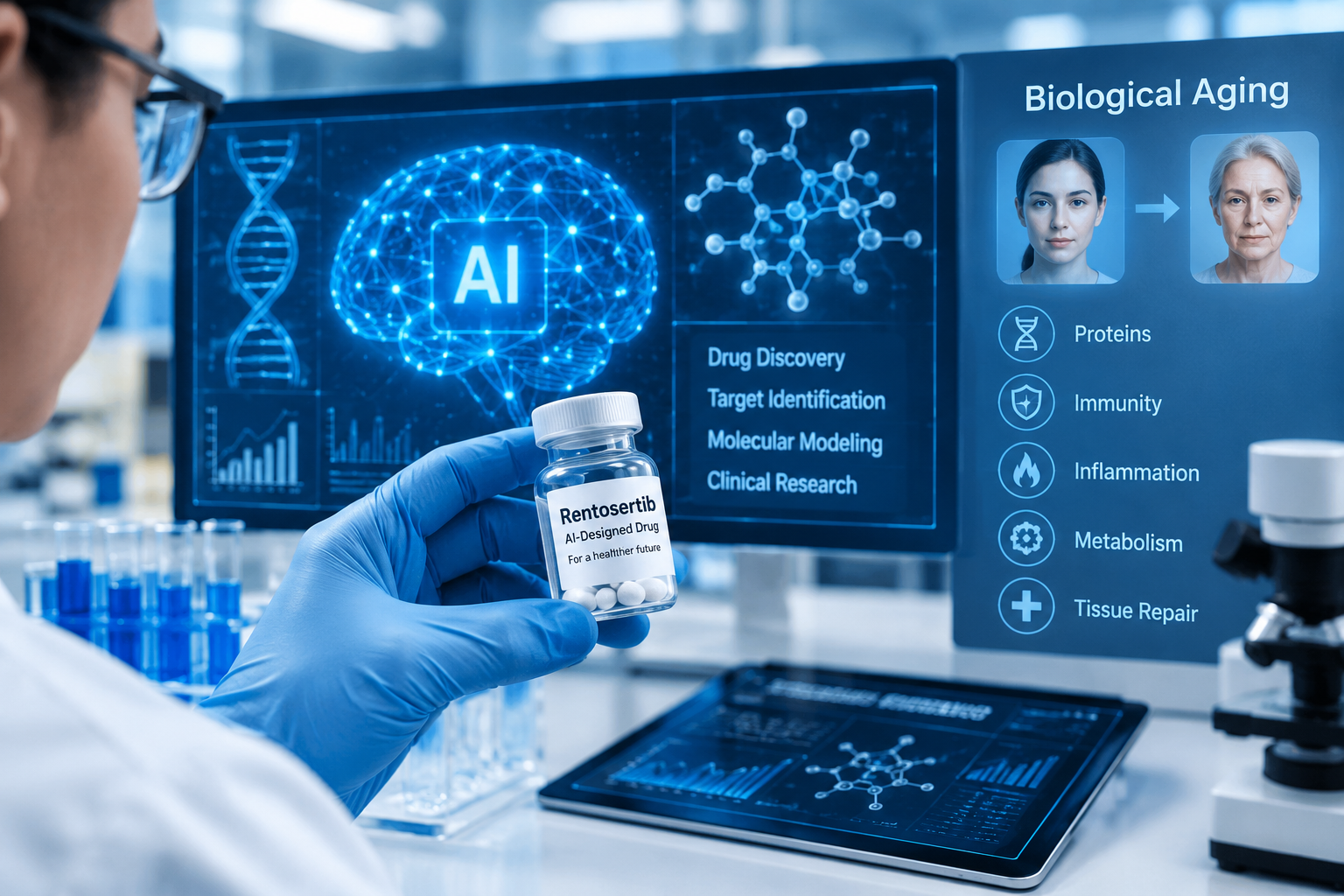
Artificial intelligence is rapidly changing modern medicine. Its use has become especially important in drug discovery. In 2026, promising findings were reported about an AI-Designed Drug called rentosertib. The drug was originally developed for idiopathic pulmonary fibrosis (IPF). IPF is a serious lung disease that causes progressive scarring of lung tissue. Interestingly, its possible effects on biological aging have also been investigated.
The findings have attracted scientific attention. Changes in biological age were observed through several independent proteomic aging clocks. However, these results should not be considered proof that aging has been reversed. Instead, they provide a valuable direction for future research. The relationship between disease, aging, and drug development can now be studied more closely.
The AI-Designed Drug was developed with artificial intelligence-supported methods. Therefore, the research shows how AI can support modern pharmaceutical development. Potential drug targets can be identified more efficiently. Promising molecular candidates can also be evaluated with greater speed.
Understanding Biological Aging

Biological aging refers to changes that occur inside the body over time. Cells, tissues, and organs are gradually affected by these changes. Biological age is different from chronological age. Chronological age only shows how many years a person has lived.
However, people of the same age can have different biological conditions. Genetics can affect this process. Lifestyle and environmental factors can also play a role. In addition, disease can influence how quickly biological changes occur.
For this reason, biological aging has become an important research field. Scientists are searching for measurable signs of aging. These signs can be used to estimate the condition of the body. As a result, biological aging clocks have been developed.
In the recent research, proteomic aging clocks were used. These tools examine patterns in proteins found in blood. Proteins are involved in many important biological processes. Inflammation, metabolism, immunity, and tissue repair are influenced by them.
Therefore, changes in protein patterns can provide useful information. The AI-Designed Drug became especially interesting because biological-age changes were detected after treatment. Nevertheless, these measurements should be viewed as research indicators. They should not be treated as direct measurements of lifespan.
How Was Rentosertib Developed?
Rentosertib was developed as a treatment candidate for idiopathic pulmonary fibrosis. Artificial intelligence was used during its discovery process. A potential disease target was identified with AI-supported methods. A molecule capable of interacting with that target was then developed.

The drug targets TNIK. This protein is involved in biological pathways linked with fibrosis. Through AI-supported methods, molecular structures and interactions could be examined more efficiently.
The development of the AI-Designed Drug is important for another reason. It demonstrates how AI is being integrated into pharmaceutical research. Traditionally, drug discovery can take many years. Thousands of chemical and biological possibilities may need to be examined.
With AI, large datasets can be processed more efficiently. Potential candidates can also be prioritized for laboratory testing. Consequently, researchers may be able to reduce some of the time spent on early discovery.
However, computer predictions cannot replace laboratory research. A molecule may appear promising in a computational model. Its real effects must still be tested. Laboratory experiments and clinical trials are therefore required.
What Did Researchers Find?
The recent analysis was based on a Phase 2a clinical trial. Patients with idiopathic pulmonary fibrosis were included. Blood-based protein measurements were collected from the participants. These measurements were then analyzed with six different proteomic aging clocks.
Interestingly, the AI-Designed Drug was associated with lower predicted biological age. Similar changes were observed across all six aging-clock models. This consistency was considered encouraging. Several independent models had been used for the assessment.
Lung-function measurements were also examined. One important measurement was forced vital capacity, or FVC. This measurement is commonly used to assess lung function.
The treatment had already shown encouraging results in IPF research. However, the newer analysis provided additional information. Possible effects on biological-age measurements were also identified.
Nevertheless, stronger conclusions cannot yet be made. A reduction in predicted biological age does not mean that the entire aging process has been reversed. Instead, certain biological pathways may have been influenced.
Why Is AI Important in Aging Research?
Artificial intelligence can process large amounts of biological information. Patterns that may be difficult to identify manually can also be detected. This ability is valuable in aging research.
Thousands of proteins and genes can interact inside the human body. Many biological pathways are connected as well. Therefore, their relationships can be difficult to study using traditional methods alone.
The AI-Designed Drug provides an example of this approach. Computational models can be used to identify potential targets. Promising candidates can then be prioritized for further testing.
Furthermore, molecular structures can be compared with AI. Potential interactions with biological targets can also be predicted. These predictions must then be tested through experiments.
As AI technology improves, more information may be combined. Genetic, proteomic, clinical, and chemical data could be analyzed together. Consequently, connections between disease and aging may be identified more efficiently.
Nevertheless, AI should remain a research tool. It should not be considered a replacement for clinical science. Laboratory studies, patient trials, safety monitoring, and regulatory reviews are still needed.
Can the Treatment Reverse Aging?
This question has attracted considerable interest. At present, however, there is not enough evidence to make that claim.

The AI-Designed Drug was linked with changes in biological-age measurements. However, biological age is not the same as chronological age. It is also different from lifespan.
A change in an aging-clock score does not automatically mean longer life. It does not prove that healthier aging will occur either. Therefore, the results should be interpreted carefully.
Moreover, the participants had idiopathic pulmonary fibrosis. They were not healthy adults from the general population. For this reason, the findings cannot automatically be applied to healthy people.
Long-term studies will be required. These studies must determine whether the molecular changes are clinically meaningful. Larger and more diverse populations will also need to be examined.
Consequently, the AI-Designed Drug should currently be considered a promising research candidate. It should not yet be described as a proven anti-aging treatment.
The Role of Proteomic Aging Clocks
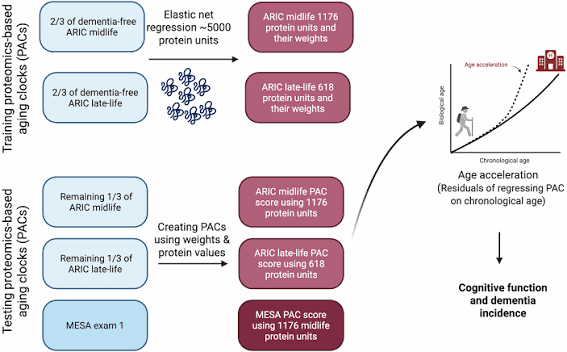
Proteomic aging clocks are becoming increasingly important. Their use has expanded within longevity research. These tools estimate biological age by analyzing protein patterns in blood.
The AI-Designed Drug research is notable for another reason. Six different proteomic aging clocks were used. Similar findings were produced across the models.
When several independent models produce similar results, confidence can be increased. However, further validation is still necessary. Aging clocks have important limitations.
These tools are based on mathematical models. Their predictions depend on the quality of the data used. Different populations may also produce different results.
For this reason, biological-age measurements should be combined with clinical indicators. Physical function can provide additional evidence. Organ health and disease outcomes can also be examined. Long-term survival would provide even stronger evidence.
Thus, the AI-Designed Drug findings should be treated as one part of a larger investigation.
What Makes This Research Different?
One important feature should be understood. The treatment was not originally created as an anti-aging medicine. It was developed to address idiopathic pulmonary fibrosis.
The AI-Designed Drug was therefore studied in a disease-specific setting. Its possible relationship with biological aging was examined later.
This approach could become useful in future medical research. Drugs developed for age-related diseases may influence aging-related pathways. These effects could potentially be identified during clinical trials.
Furthermore, AI could help discover new connections. Diseases and aging mechanisms could be compared more efficiently. This may support the development of treatments aimed at improving healthspan.
However, such possibilities will require strong evidence. A promising biological signal cannot be treated as a confirmed medical benefit.
Why Are Larger Clinical Trials Needed?
Although the early findings are encouraging, larger trials will be necessary. The AI-Designed Drug must be evaluated in more patients. Its effectiveness and safety can then be understood more clearly.
Phase III research can provide stronger evidence. Important benefits can be measured more accurately. Side effects can also be identified more effectively.
In addition, longer follow-up periods will be required. Aging-related outcomes cannot be fully understood within only a few weeks or months.
If the AI-Designed Drug continues to show positive effects, interest may increase. Its broader biological effects could then be investigated. However, anti-aging applications would still require separate evidence.
Potential Impact on Future Medicine
The research could have effects beyond one drug. It could also influence how future medicines are developed. AI-assisted drug discovery is already changing pharmaceutical research.
In the future, AI may help identify shared biological pathways. These pathways could be connected with several age-related diseases. Conditions affecting the lungs, heart, brain, and other organs may be studied together.
Moreover, biological-age measurements could become more common. Reliable biomarkers could help researchers evaluate treatment effects. Changes in biological processes could then be monitored more efficiently.
The AI-Designed Drug research therefore represents a broader scientific shift. Artificial intelligence is being combined with molecular biology. Clinical medicine is also being integrated into this approach.
Challenges and Limitations
Despite the promising findings, several challenges remain. First, the available evidence is still limited. Larger clinical studies are needed.
Second, biological-age clocks require further validation. Their relationship with actual health outcomes must be better understood. A lower biological-age score does not prove that healthspan has been extended.
Third, long-term safety must be carefully assessed. Medicines that affect important biological pathways can produce unexpected effects. Some effects may not appear during short studies.
The AI-Designed Drug must therefore continue to be evaluated. Carefully controlled clinical research will be required. Independent studies will also be valuable.
If similar findings are reproduced by other researchers, confidence could increase. Nevertheless, the evidence must remain subject to scientific review.
Could AI Transform Longevity Research?
AI could become an important tool in longevity research. Genetic information can already be analyzed with machine learning. Protein data and medical records can also be studied.
The AI-Designed Drug demonstrates this growing potential. Computational technologies can support drug development. They can also help researchers study biological changes.
In the future, AI systems may identify combinations of biological targets. New medicines could then be designed around those targets. Patient responses may also be predicted more accurately.
However, impressive predictions are not enough. Scientific findings must be validated through experiments. Clinical trials must also be completed.
Therefore, the AI-Designed Drug should be viewed as part of an evolving process. It should not be considered the final answer to human aging.
What Could Happen Next?
The next stage of research will be closely monitored. More patients will need to be studied. Longer-term information will also need to be collected.
If the AI-Designed Drug continues to show positive effects, further studies may be conducted. Researchers could examine whether its biological effects extend beyond pulmonary fibrosis.
Similar AI-assisted methods may also be used for other diseases. Age-related conditions could become important targets. However, stronger clinical evidence will be needed.
Scientists will also need to determine whether aging-clock changes matter clinically. A biological signal must be connected with meaningful health outcomes.
These questions cannot be answered through one trial. Instead, years of research may be required. Independent validation will also be important.
Frequently Asked Questions
1. What is an AI-Designed Drug?
An AI-Designed Drug is a medicine developed with artificial intelligence support. AI can be used to identify targets. Molecular structures can also be analyzed and prioritized.
2. What is rentosertib being studied for?
Rentosertib was developed mainly for idiopathic pulmonary fibrosis. Its possible effects on biological aging are now being investigated.
3. Does rentosertib reverse human aging?
No. Current evidence does not establish that rentosertib reverses human aging. Changes in biological-age measurements do not prove longer lifespan.
4. What are biological aging clocks?
Biological aging clocks are computational models. They estimate biological age from measurable information. Proteins, genes, and other biomarkers can be used.
5. Why were six aging clocks used?
Multiple models can provide a broader assessment. Similar results across different models can make a finding more worthy of further research.
6. Is the treatment available as an anti-aging medicine?
No. It should not currently be considered an approved anti-aging medicine. Further research is required to establish its safety and effectiveness.
7. How could AI help future drug research?
AI can analyze large datasets quickly. Potential targets can be identified. Molecular interactions can also be predicted. However, laboratory and clinical testing will still be required.
8. What is the next important step?
Larger and longer clinical trials will be important. They can show whether the early biological signals are reproducible. They can also determine whether those signals are linked with meaningful health outcomes.
Conclusion
The emergence of an AI-Designed Drug with promising biological-aging findings is an exciting development. Rentosertib was originally developed for idiopathic pulmonary fibrosis. Its possible effects on biological-age measurements have now attracted wider interest.
The AI-Designed Drug was associated with reductions in predicted biological age. These changes were observed across six proteomic aging clocks. The findings provide an encouraging signal for further research.
However, aging has not been proven to be reversed. Lifespan extension has not been demonstrated either. More evidence will therefore be required.
The research highlights the growing role of artificial intelligence in medicine. AI can support drug discovery and biological analysis. When combined with clinical research, new possibilities may be explored.
Ultimately, the AI-Designed Drug remains under investigation. Larger studies and longer follow-ups will be needed. If future research confirms the early findings, an important milestone could be reached in AI-driven medicine.
For now, the evidence should be viewed with cautious optimism. The results are promising, but the science is still developing. The AI-Designed Drug offers an intriguing research direction for future medicine and longevity science.