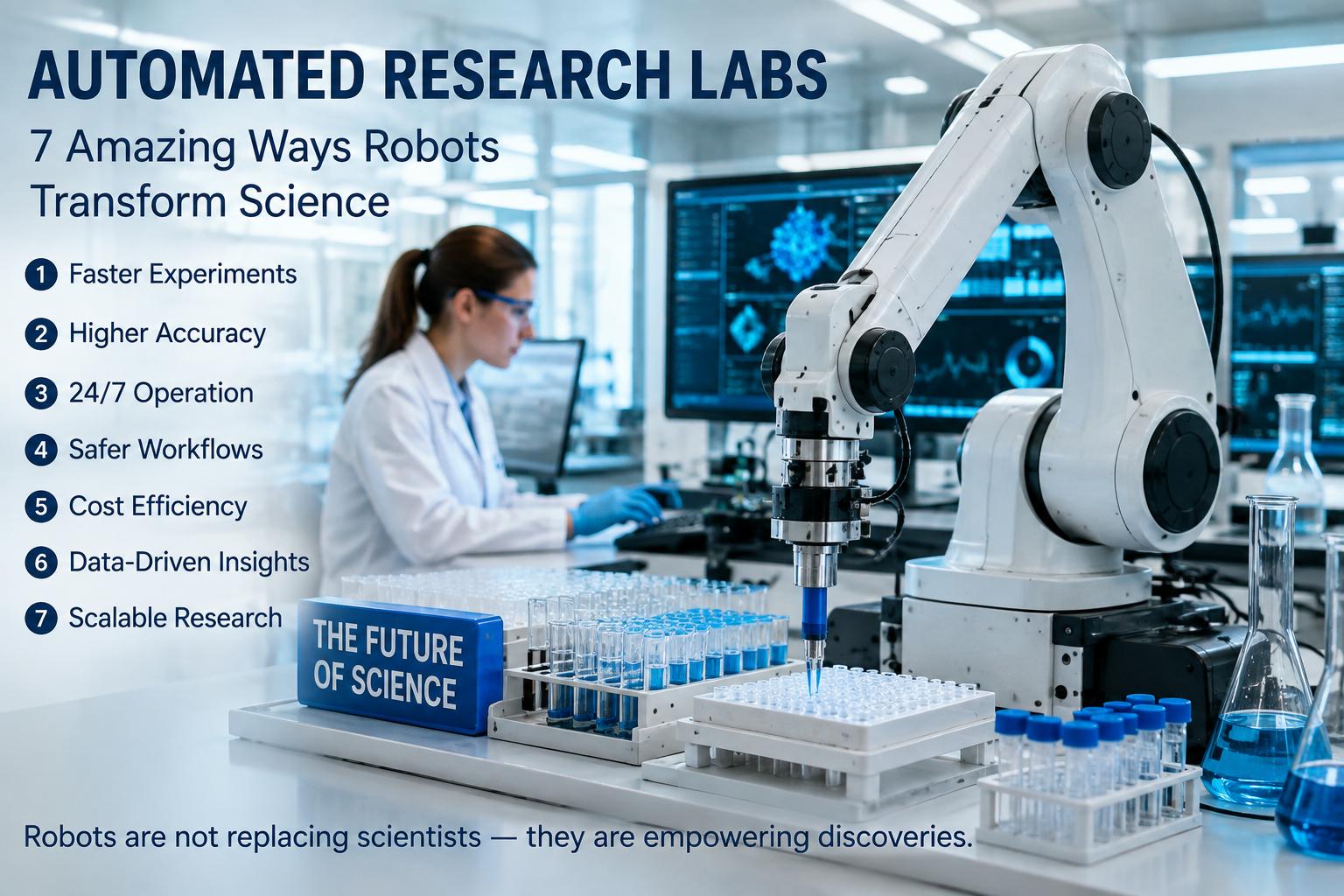
Research Labs: 7 Amazing Ways Robots Transform Science
Automated Research Labs are being developed rapidly in 2026, and scientific experiments are being changed through robotics, artificial intelligence, and advanced laboratory systems. Repetitive laboratory tasks are being performed by robots, while experimental data is being analyzed with AI. Moreover, new experiments can increasingly be selected according to previous results. As a result, scientific research is being made faster, more consistent, and more automated.
Table of Contents
- What Are Automated Research Labs?
- 7 Ways Robots Are Changing Experiments
- AI and Robotic Research
- Self-Driving Laboratories
- Benefits and Challenges
- Future of Automated Research
- FAQs
- Conclusion
What Are Automated Research Labs?
Automated Research Labs are laboratory environments in which robots, software, sensors, and scientific instruments are being used to perform research tasks with reduced human intervention.
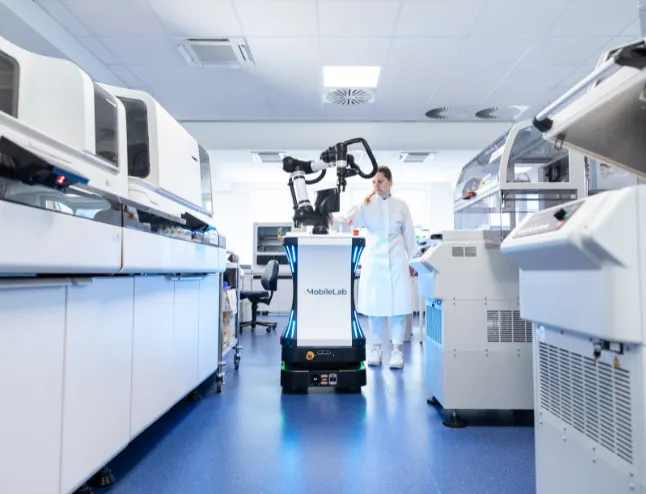
In traditional laboratories, samples are often prepared, transferred, measured, and analyzed manually. Therefore, a considerable amount of time can be required when hundreds of experiments need to be completed.
In automated laboratories, many of these tasks are being performed by robotic equipment. Samples can be moved automatically, liquids can be measured precisely, and instruments can be operated according to programmed instructions.
Furthermore, artificial intelligence can be connected to laboratory systems. Experimental results can then be analyzed, and new experiments can be selected according to the information that has been collected.
When these processes are connected into a continuous feedback system, the laboratory can be described as a self-driving laboratory.
7 Amazing Ways Automated Research Labs Are Changing Experiments
1. Repetitive Laboratory Tasks Are Being Automated
One of the most important advantages of Automated Research Labs is that repetitive laboratory work can be automated.
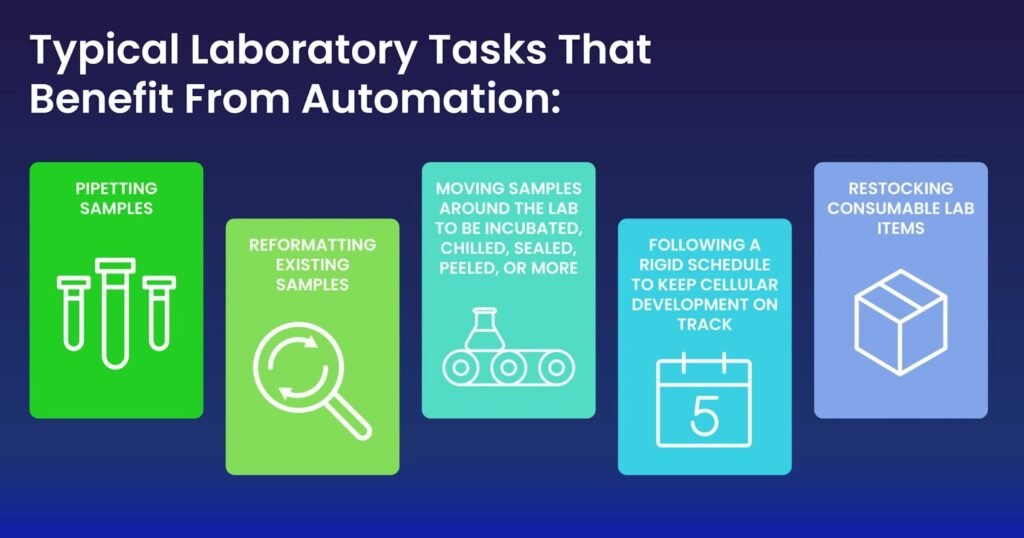
Samples can be transferred between containers by robotic arms. Precise quantities of liquids can be distributed by automated systems. Moreover, laboratory instruments can be operated according to predefined procedures.
Previously, many of these activities were performed manually.
Now, the same procedures can be repeated by robots with less direct human involvement.
As a result, researchers can be given more time for scientific analysis, experimental planning, and interpretation.
For example, automated liquid handlers can be programmed to dispense specific quantities of chemicals into laboratory containers. Consequently, variations caused by repetitive manual work can be reduced.
However, automated equipment still needs to be calibrated and monitored carefully.
2. High-Throughput Experiments Are Being Performed
Another major development is the use of robots for high-throughput experimentation.
In a traditional laboratory, a limited number of experiments may be completed because samples have to be prepared and handled manually.
In Automated Research Labs, however, many experiments can be performed in sequence.
Samples can be prepared automatically. They can then be moved between laboratory stations and delivered to analytical instruments.
Furthermore, different experimental conditions can be tested within the same research campaign.
For example, temperature, concentration, reaction time, or material composition can be changed across multiple experiments.
As a result, a larger experimental space can be explored without requiring every step to be performed manually.
Therefore, high-throughput robotics is being considered an important tool for modern experimental research.
3. AI Is Being Used to Select Experiments
Robots are mainly used for physical laboratory work. However, artificial intelligence can be used to support research decisions.
This combination is becoming increasingly important in Automated Research Labs.
First, experimental data is collected.
Next, the data is analyzed by an AI system.
Based on those results, another experiment can be recommended.
That experiment can then be performed by robotic equipment.
Afterward, the new results can be analyzed again.
Consequently, a continuous design–make–test–analyze cycle can be created.
This approach is especially useful when hundreds of possible experiments are available.
Instead of testing every possibility randomly, promising experiments can be selected according to previous results.
Therefore, research can potentially be made more efficient.
However, AI-generated decisions still need to be reviewed because an incorrect prediction can lead to an unsuitable experiment.
4. Research Time Can Be Reduced
Scientific discovery can sometimes be slowed by repeated laboratory testing.
For example, a new material may need to be tested under many different conditions before its best performance can be identified.

With Automated Research Labs, these conditions can be explored systematically.
Different samples can be prepared by robots. Measurements can then be collected automatically.
Furthermore, AI can be used to identify promising conditions from the collected data.
As a result, experiments that might otherwise take a long time can potentially be completed more efficiently.
In 2026, flexible self-driving laboratory systems have been developed for automated reaction optimization. Experimental conditions can be selected, tested, and adjusted within connected research workflows.
Therefore, automation is being used not only to perform experiments but also to improve the way experiments are selected.
5. Experimental Reproducibility Can Be Improved
Reproducibility is considered one of the most important principles of scientific research.
When an experiment is repeated, similar procedures should produce comparable results.
However, small differences can sometimes be introduced when repetitive tasks are performed manually.
For example, liquid volumes, timing, or sample handling can vary slightly.
In Automated Research Labs, these procedures can be standardized and repeated by robotic equipment.
The same instructions can be followed each time.
As a result, some sources of human variation can be reduced.
Moreover, experimental records can be stored digitally. This can make laboratory procedures easier to track and review.
Nevertheless, perfect reproducibility cannot be guaranteed by automation alone.
Equipment calibration, sample quality, software errors, and environmental conditions can still affect results.
Therefore, automated systems must be tested and maintained carefully.
How AI and Robots Work Together
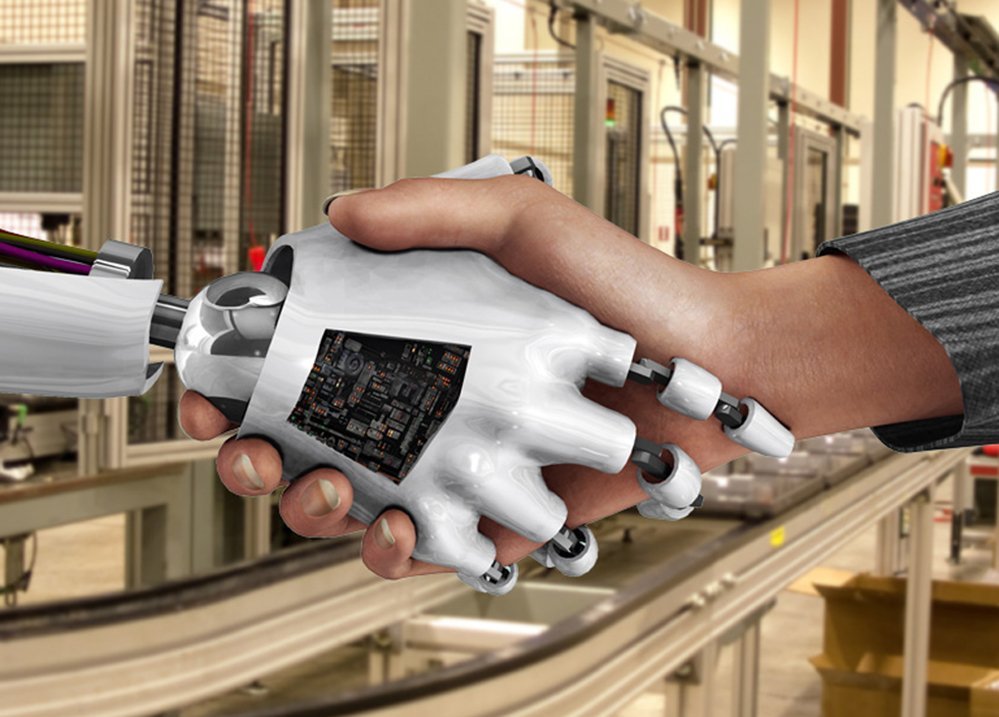
The most advanced Automated Research Labs are not being built around robots alone.
Instead, robots, AI systems, sensors, and scientific instruments are being connected.
The physical work is performed by robots.
The data is collected through sensors and instruments.
The collected information is analyzed by software and AI.
Finally, experimental decisions can be supported by the analyzed results.
As a result, a connected research workflow can be created.
Automated Research Workflow
| Research Stage | Traditional Laboratory | Automated Research Labs |
|---|---|---|
| Experiment planning | Mostly performed manually | AI-assisted planning can be used |
| Sample preparation | Performed by researchers | Robotic systems can be used |
| Sample movement | Handled manually | Automated movement can be performed |
| Measurement | Human supervision is required | Automated instruments can be used |
| Data analysis | Manual and computational methods | AI-assisted analysis can be performed |
| Next experiment | Selected by researchers | AI recommendations can be provided |
| Repetition | More time may be required | High-throughput systems can be used |
The table shows how different research stages can be supported through automation.
However, the level of automation varies between laboratories and scientific fields.
Self-Driving Laboratories Are Being Developed
One of the most advanced developments related to Automated Research Labs is the self-driving laboratory.
Traditional automation usually follows a fixed sequence of instructions.
For example, a robot may be programmed to transfer a specific amount of liquid between containers.
A self-driving laboratory can be designed to perform more adaptive research.
Experimental results can be collected and analyzed.
Based on those results, the next experiment can be selected.
That experiment can then be performed automatically.
Consequently, a feedback loop can be established between experimentation and decision-making.
Furthermore, multiple experiments can be connected through the same workflow.
This approach is being explored particularly in chemistry, materials science, biology, and other experimental fields.
Automated Research Labs Are Being Used in Chemistry
Chemistry is one of the areas in which laboratory automation is being developed rapidly.
Chemical reactions often need to be tested under different temperatures, concentrations, catalysts, solvents, and reaction times.
If these combinations are tested manually, considerable time may be required.
With Automated Research Labs, many of these conditions can be tested by robotic equipment.
Samples can be prepared automatically.
Reaction conditions can be changed according to programmed instructions.
Measurements can then be collected and analyzed.
Moreover, AI can be used to identify promising reaction conditions.
In 2026, autonomous chemical experimentation systems were developed in which natural-language instructions were converted into executable laboratory procedures.
As a result, laboratory automation is being expanded beyond simple repetitive tasks.
Self-Correction Is Also Being Explored
Unexpected problems can occur during laboratory experiments.
A sample may be placed incorrectly. An instrument may provide an unusual reading. A liquid-handling procedure may also fail.
Therefore, self-correction is becoming an important feature.
In newer automated systems, errors can be detected and corrective actions can be suggested or performed.
However, safety limits must always be established.
A laboratory robot should not be allowed to make unrestricted decisions when hazardous materials or sensitive instruments are involved.
Automated Research Labs and Materials Science
Materials science is another field where Automated Research Labs can be highly useful.
Researchers often need to test different material compositions to identify improved properties.
Hundreds of combinations may be possible.
If every combination is tested manually, a large amount of time and material can be consumed.
With robotic systems, samples can be prepared and tested automatically.
Meanwhile, AI models can be used to identify promising material combinations.
The results can then be fed back into the research system.
Consequently, the next group of experiments can be selected using information from earlier tests.
This creates an adaptive research process.
Furthermore, computational predictions can be combined with physical experiments.
As a result, theoretical predictions can be tested more efficiently in the laboratory.
Automated Research Labs Can Save Resources
Scientific research can require chemicals, energy, laboratory space, equipment, and human time.
Therefore, reducing unnecessary experiments can be valuable.
AI can be used to identify experiments that are likely to provide useful information.
Those experiments can then be performed by robotic systems.
As a result, resources may be used more efficiently within a research campaign.
Moreover, automated systems can operate for extended periods when appropriate.
Experiments can potentially be performed during periods when researchers are not physically present.
However, continuous operation must be supported by proper safety monitoring.
Therefore, automation should always be combined with appropriate laboratory controls.
A New Generation of Affordable Research Labs
Advanced laboratory automation has traditionally been associated with high costs.
Robotic equipment, sensors, analytical instruments, and software can require significant investment.
However, more flexible and modular systems are being developed.
In 2026, research has been reported on self-driving laboratory platforms designed with customizable hardware and software.
Such systems can be adapted to different experimental requirements.
As a result, laboratory automation could potentially become more accessible to smaller research groups.
Furthermore, modular systems can allow individual components to be replaced or upgraded without rebuilding the entire laboratory.
This could make future Automated Research Labs more flexible and practical.
Challenges Facing Automated Research Labs
Despite their advantages, Automated Research Labs are also associated with several challenges.
First, different laboratory instruments may use different software and communication systems.
Therefore, integration can be difficult.
Second, AI-generated decisions need to be validated.
A robot may perform an experiment perfectly, but the selected experiment may still be scientifically unsuitable.
Third, safety must be carefully controlled.
If a system is allowed to select and perform experiments independently, strict boundaries must be established.
Furthermore, data quality must be maintained.
Poor-quality data can lead to poor AI decisions.
Consequently, reliable sensors, accurate measurements, and well-designed software are required.
Human Scientists Are Still Needed
Robots are not simply being introduced to remove scientists from laboratories.
Instead, scientists are being provided with new tools.
Research goals can be defined by humans.
Safety boundaries can also be established by researchers.
Meanwhile, repetitive laboratory work can be performed by robots.
AI can then be used to support data analysis and experimental planning.
As a result, human and machine capabilities can be combined.
Moreover, unexpected findings still need scientific interpretation.
Therefore, human expertise remains an important part of automated research.
Future of Automated Research Labs
The future of Automated Research Labs is likely to be shaped by deeper integration between AI, robotics, sensors, and scientific instruments.
Research questions may first be defined by scientists.
Then, possible experiments could be generated by AI.
Samples could be prepared by robots.
Experiments could be performed automatically.
Results could be measured and analyzed.
Finally, new experiments could be selected from the collected evidence.
Consequently, a continuous scientific feedback loop could be created.
Furthermore, more affordable and modular systems may be developed.
This could allow automated research to be introduced into a wider range of laboratories.
However, reliable validation, safety systems, data standards, and human oversight will remain necessary.
Therefore, the future of automated research is likely to be based on collaboration rather than complete replacement of scientists.
Frequently Asked Questions
What Are Automated Research Labs?
Automated Research Labs are laboratories in which robots, software, sensors, and scientific instruments are being used to perform research tasks with reduced manual intervention.
Can Robots Perform Scientific Experiments?
Yes. Samples can be prepared, transferred, measured, and tested by robotic systems. Moreover, repetitive experimental procedures can be performed automatically.
What Is a Self-Driving Laboratory?
A self-driving laboratory is a research environment in which AI, robotics, automated instruments, and data analysis are combined so that experiments can be selected and adjusted with limited human intervention.
Can Automated Research Labs Replace Scientists?
No. Scientists are still needed for research planning, scientific judgment, safety decisions, interpretation, and validation.
Why Are Automated Research Labs Important?
They can reduce repetitive work, increase experimental throughput, improve consistency, and allow large numbers of experiments to be performed more efficiently.
Can AI Control Laboratory Robots?
In some research systems, AI can be connected with robotic equipment. Experimental data can be analyzed, and recommendations for future experiments can be generated.
What Are the Main Challenges?
Equipment integration, safety, data quality, reproducibility, AI reliability, and human oversight are among the major challenges.
Conclusion
Automated Research Labs are changing scientific experimentation by combining robotics, artificial intelligence, sensors, and laboratory instruments.
Repetitive tasks are being automated. Samples are being prepared and transferred by robots. Large numbers of experiments can be performed through high-throughput systems. Moreover, experimental results can be analyzed with AI and used to guide future experiments.
Self-driving laboratories are taking this development even further. Instead of following only fixed instructions, experiments can increasingly be selected according to previous results.
As a result, a continuous research cycle can be created in which experiments are planned, performed, analyzed, and improved.
However, automation is not a replacement for scientific judgment.
Human researchers are still needed to define research goals, establish safety limits, interpret unexpected findings, and validate discoveries.
Therefore, the most promising future for Automated Research Labs may be based on collaboration between humans, robots, and AI.
As these systems become more advanced, scientific experiments could be performed more efficiently, more consistently, and on a much larger scale.