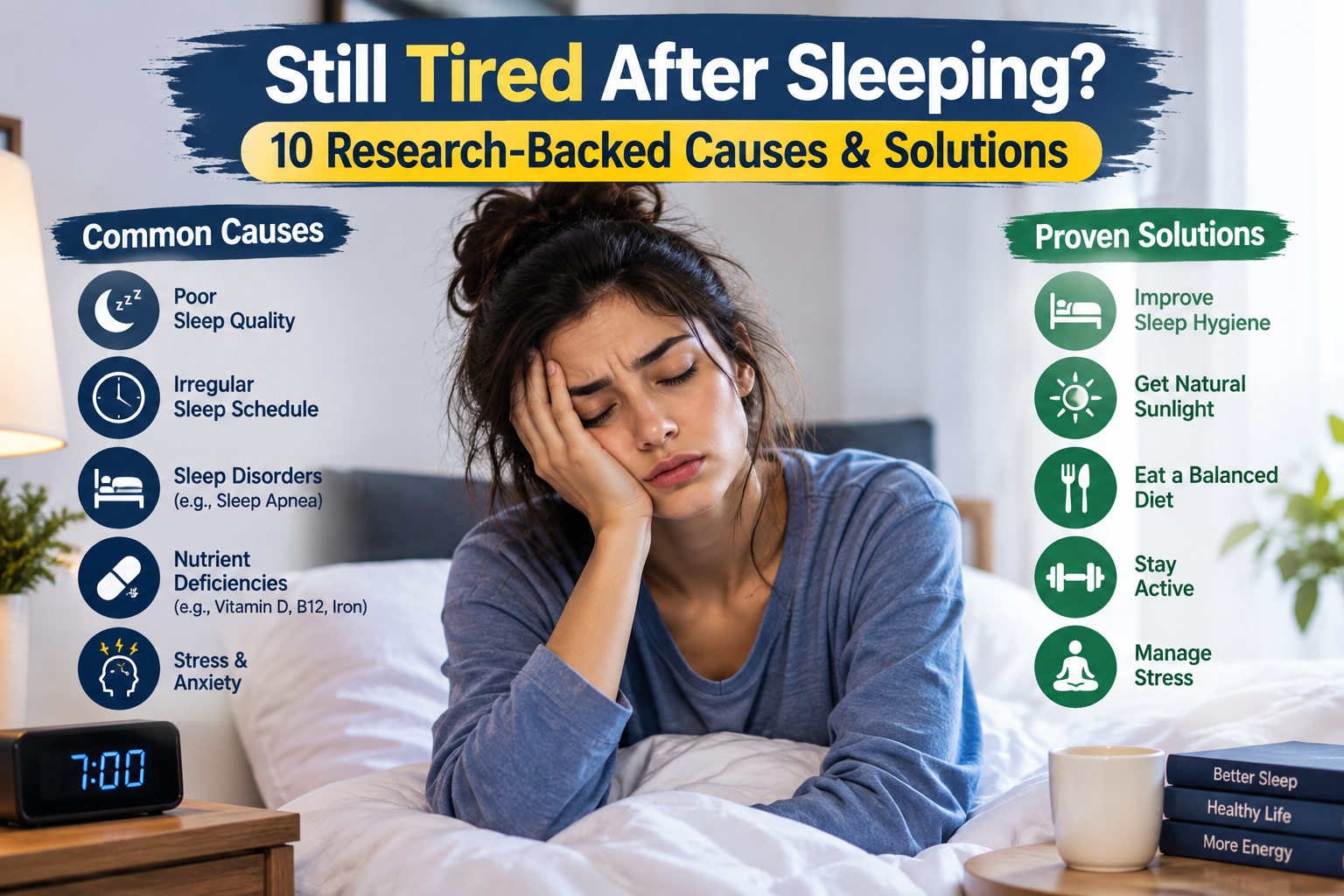
Still Tired After Sleeping? 10 Research-Backed Causes & Solutions
Waking up tired can be frustrating, especially when you feel like you have slept for a full night. If you are still tired after sleeping, the problem may not simply be that you need more sleep. Poor sleep quality, an irregular routine, stress, caffeine, sleep disorders, and other factors can leave you feeling exhausted even after spending enough time in bed. In this article, we’ll explore 10 research-backed causes of feeling tired after sleeping and simple ways that may help you wake up feeling more refreshed.
Table of Contents
- Why Are You Still Tired After Sleeping?
- 10 Research-Backed Causes
- How to Feel More Refreshed After Sleeping
- When to Talk to a Doctor
- Final Takeaway
Why Are You Still Tired After Sleeping?
If you are still tired after sleeping, the problem may not simply be the number of hours you spend in bed. Sleep duration and sleep quality are different. You can spend enough time asleep but still wake up feeling exhausted if your sleep is repeatedly interrupted or your body is not getting restorative sleep.
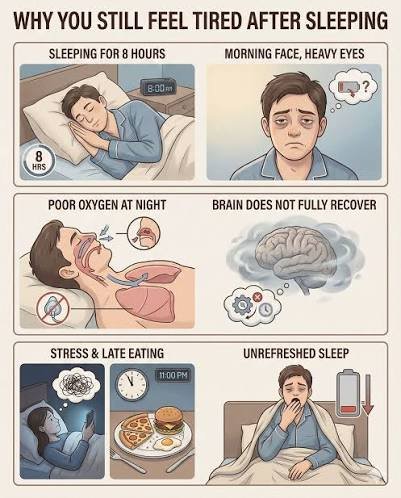
For adults, getting at least 7 hours of sleep is generally recommended. Yet CDC data found that 30.5% of U.S. adults reported sleeping less than seven hours on average in 2024.
So, if you regularly wake up tired despite apparently getting enough sleep, there may be another explanation.
10 Research-Backed Causes of Still Tired After Sleeping
1. Still Tired After Sleeping Because You Are Not Getting Enough Sleep
Eight hours in bed does not always mean eight hours of actual sleep. Late nights, early alarms, frequent awakenings, or an inconsistent schedule can reduce your total sleep time.
Adults generally need at least seven hours of sleep, although individual needs can vary.
Simple solution: Try keeping a consistent bedtime and wake-up time, including on weekends.
2. Poor Sleep Quality Can Leave You Tired
If your sleep is repeatedly interrupted, you may not feel refreshed in the morning even after spending plenty of time in bed.
Noise, light, an uncomfortable room, stress, or frequent nighttime awakenings can all interfere with sleep Still Tired After Sleeping?.
Try this: Keep your bedroom dark, quiet and comfortable, and follow a relaxing bedtime routine.
3. Sleep Apnea May Explain Why You Are Still Tired After Sleeping
Sleep apnea is an important cause of daytime tiredness. During sleep, breathing can repeatedly stop and restart, disrupting normal sleep.
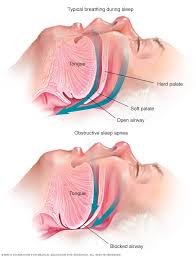
Possible symptoms include loud snoring, gasping for air during sleep, daytime sleepiness, fatigue and difficulty concentrating.
Possible warning signs:
- Loud or frequent snoring
- Waking up gasping
- Morning headaches
- Excessive daytime sleepiness
- Difficulty focusing
If these symptoms occur regularly, discuss them with a healthcare professional Still Tired After Sleeping?.
4. An Irregular Sleep Schedule Can Make You Wake Up Tired
Your body follows a natural sleep-wake rhythm. Going to bed at very different times each night can make it harder to wake up feeling refreshed.
Working late, sleeping much longer on weekends, or frequently changing your bedtime can disrupt your routine.
Better approach: Choose a realistic bedtime and wake-up time and try to keep them consistent.
5. Stress Can Affect Sleep Quality
You might technically sleep for eight hours while your mind remains highly active before bedtime or during the night.
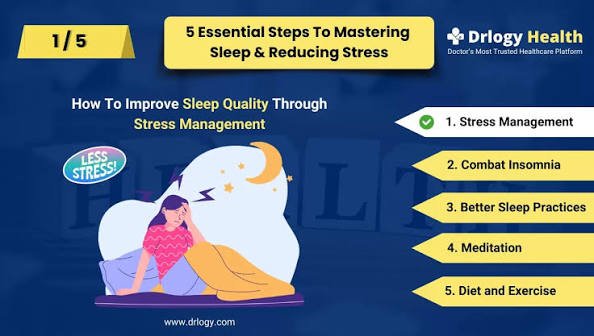
Stress can make it harder to fall asleep and may contribute to poor-quality sleep. The result can be waking up feeling mentally and physically drained.
Try: Write down tomorrow’s tasks before bed, practice slow breathing, and reduce stimulating activities close to bedtime.
6. Caffeine Late in the Day May Affect Your Sleep
Coffee, energy drinks, tea and other caffeinated beverages can interfere with sleep for some people Still Tired After Sleeping?.
You might fall asleep normally but still experience poorer sleep quality.
Simple experiment: If you regularly wake up tired, consider avoiding caffeine later in the day and see whether your sleep quality changes.
7. Alcohol Can Make You Feel Tired After Sleeping
Alcohol may make some people feel sleepy initially, but it can interfere with normal sleep patterns later in the night.
This means you can sleep for many hours without feeling properly refreshed the next morning.
Paying attention to alcohol timing and your sleep quality may help you identify whether there is a connection.
8. Your Sleep Environment May Be Working Against You
Your bedroom can have a bigger impact than you realize.
Too much light, noise, heat, an uncomfortable mattress, or frequent interruptions can reduce sleep quality.
| Sleep Factor | Better Approach |
|---|---|
| Light | Keep the room dark |
| Noise | Reduce unnecessary sounds |
| Temperature | Keep the room comfortable |
| Screens | Reduce stimulating screen use before bed |
| Schedule | Keep consistent sleep and wake times |
These small changes can make your normal sleep routine more restorative.
9. Some Health Problems Can Cause Persistent Fatigue
Sometimes still tired after sleeping is not primarily a sleep problem.
Persistent fatigue can be associated with various health conditions, nutritional deficiencies, hormonal issues or medications.
That does not mean tiredness automatically indicates a medical condition. But if fatigue continues despite improving your sleep habits, it is reasonable to discuss it with a healthcare professional.
10. Sleep Inertia Can Make You Tired Right After Waking
Sometimes you are not actually sleep-deprived—you simply need time to become fully alert.
This temporary grogginess after waking is commonly called sleep inertia. It can make you feel sluggish, unfocused or sleepy shortly after getting out of bed.
If your tiredness improves relatively quickly after waking, sleep inertia may be part of the explanation.
What the Research Says About Sleep Duration
Recent CDC research provides an important picture of sleep habits among U.S. adults.

The CDC found that 30.5% of U.S. adults slept less than seven hours on average in 2024. The same report found that only 54.8% reported waking up well-rested.
This shows why simply asking “How many hours did I sleep?” may not tell the whole story.
How to Stop Feeling Tired After Sleeping
If you frequently wake up tired, start with simple changes rather than changing everything at once.
Build a Consistent Sleep Routine
Go to bed and wake up around the same time every day. Consistency can help support your body’s sleep-wake rhythm.
Improve Your Bedroom
Make your sleeping environment dark, quiet and comfortable. Remove unnecessary distractions that could interrupt your sleep.
Watch Your Evening Habits
Pay attention to caffeine, alcohol, nicotine, heavy meals and stimulating activities close to bedtime.
Get Enough Sleep
Adults generally need at least seven hours of sleep, although individual needs vary.
Track Your Sleep and Morning Energy
A simple sleep diary can help you notice patterns in bedtime, wake-up time, nighttime awakenings and daytime tiredness.
When Should You Get Help for Still Tired After Sleeping?
Occasional morning tiredness is common. However, persistent or severe daytime sleepiness deserves attention.
Consider speaking with a healthcare professional if:
- You regularly feel exhausted despite adequate sleep.
- You frequently fall asleep during the day.
- You snore loudly or wake up gasping.
- Your tiredness is affecting work, driving or daily activities.
- Improving your sleep habits does not help.
Sleep apnea, for example, can require a sleep study for proper diagnosis.
Final Thoughts on Still Tired After Sleeping
Being still tired after sleeping does not always mean you simply need more hours in bed. Sleep duration, sleep quality, daily habits, stress, your sleep environment and possible sleep disorders can all play a role.
Start with the basics: maintain a consistent sleep schedule, create a comfortable bedroom, review caffeine and alcohol habits, and aim for adequate sleep. If persistent fatigue continues—or you have symptoms such as loud snoring, gasping or significant daytime sleepiness—consider discussing the problem with a healthcare professional.
The goal is not just to sleep longer, but to wake up feeling genuinely rested.